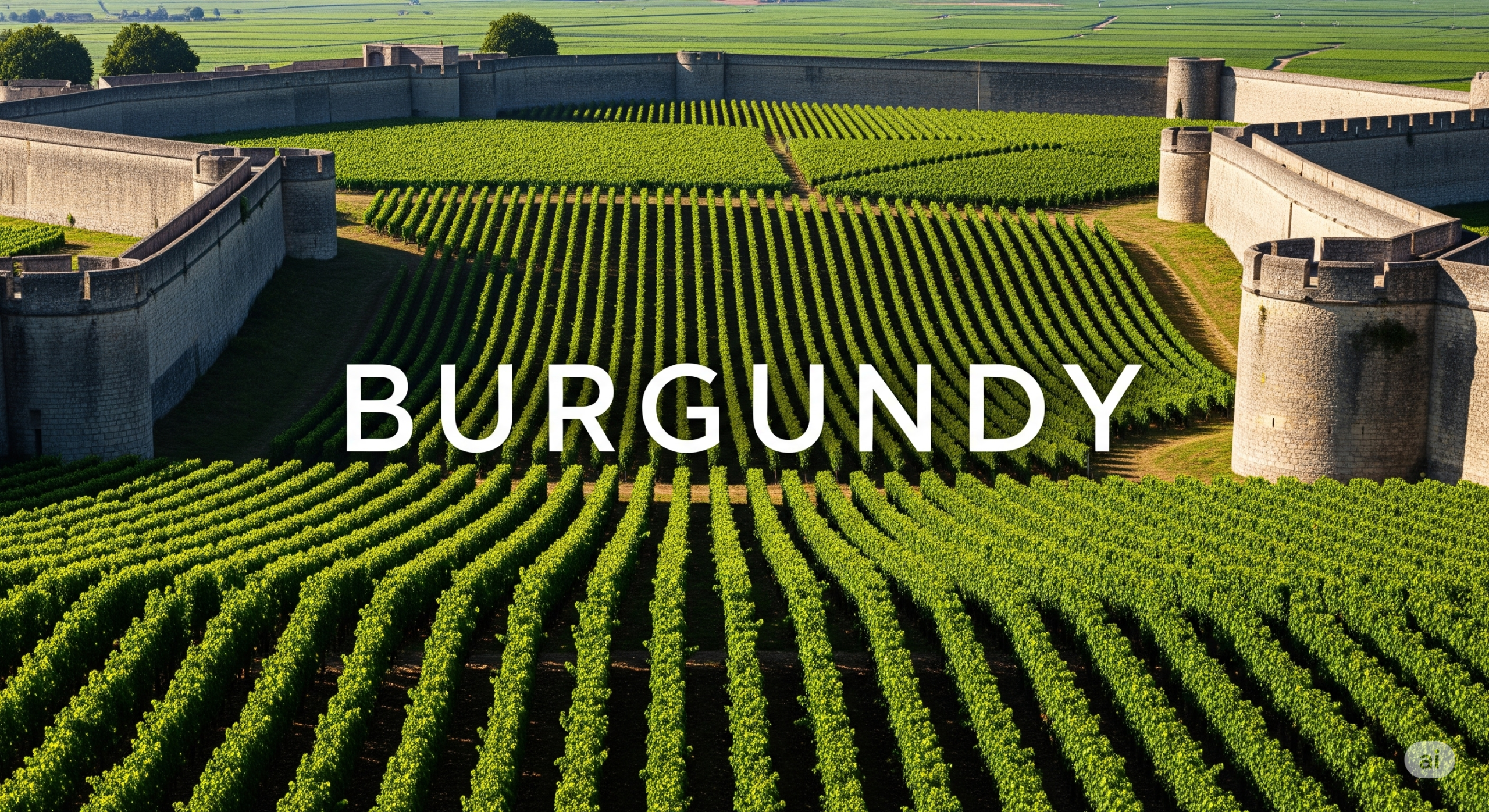
Burgundy, or Bourgogne in French, stands as one of the most revered and complex wine regions globally. Revered for its precise expression of terroir, Burgundy’s wines—mainly made from Pinot Noir and Chardonnay—capture not just the grape but the soil, slope, aspect, and microclimate of every parcel of land.
Spanning over 28,000 hectares, with a mosaic of over 1,200 climats, Burgundy's structure is both fascinating and daunting. This blog explores Burgundy in comprehensive detail, covering geography, climate, grapes, classifications, viticulture, winemaking, key appellations, and market dynamics.
Burgundy: Overview and History
Burgundy’s viticultural legacy spans two millennia. In the Middle Ages, monastic orders such as the Benedictines (at Cluny) and the Cistercians (at Cîteaux and Clos de Vougeot) played a central role in identifying and cultivating the best vineyard plots.
The French Revolution and Napoleonic inheritance laws led to vineyard fragmentation, a hallmark of Burgundy today, where a Grand Cru vineyard may be divided among dozens of owners.
Burgundy’s Key Sub-Regions
A. Chablis
- Grape: 100% Chardonnay
- Climate: Cool continental; frequent spring frost and autumn rains
- Soils: Kimmeridgian marl for quality sites; Portlandian limestone for Petit Chablis
➤ Chablis Quality Pyramid
- Petit Chablis – High ground; Portlandian soils; lighter style
- Chablis – Mid-slope; classic style
- Premier Cru – 40 designated climats, such as Montée de Tonnerre, Fourchaume
- Grand Cru – 7 climats, all on one southwest-facing slope:
- Les Clos
- Vaudésir
- Valmur
- Les Preuses
- Grenouilles
- Bougros
- Blanchot
- Many wines are unoaked, though oak may be used subtly by top producers.
B. Côte d'Or (Côte de Nuits & Côte de Beaune)
The Côte d’Or is a narrow strip of vineyard land running 50 km from Dijon to Santenay, divided into:
- Côte de Nuits (north) – Almost exclusively Pinot Noir, home to 24 of 33 Grand Crus
- Côte de Beaune (south) – Both Pinot Noir and Chardonnay, with 9 Grand Crus
➤ Important Côte de Nuits Villages
| Village | Grand Crus | Style |
|---|---|---|
| Gevrey-Chambertin | 9 Grand Crus including Chambertin, Clos de Bèze | Structured, robust Pinot Noir |
| Morey-Saint-Denis | Clos de la Roche, Clos Saint-Denis | Balanced, floral wines |
| Chambolle-Musigny | Musigny | Silky, perfumed wines |
| Vosne-Romanée | Romanée-Conti, Richebourg | Opulent, age-worthy |
| Nuits-Saint-Georges | No Grand Cru | Earthy, firm style |
➤ Important Côte de Beaune Villages
| Village | Grand Crus | Style |
|---|---|---|
| Aloxe-Corton | Corton, Corton-Charlemagne | Structured reds, opulent whites |
| Beaune | 42 Premier Crus | Medium-bodied Pinot Noir |
| Pommard | No Grand Cru | Firm, tannic reds |
| Volnay | No Grand Cru | Feminine, elegant reds |
| Meursault | No Grand Cru | Rich Chardonnay, nutty with age |
| Puligny-Montrachet | Montrachet, Chevalier-Montrachet | Leaner, precise whites |
| Chassagne-Montrachet | Bâtard-Montrachet, Bienvenues-Bâtard-Montrachet | Fuller, more tropical whites |
C. Côte Chalonnaise
- Lies south of Côte de Beaune
- No Grand Crus, but several Premier Crus
- Less expensive land = greater value wines
➤ Key Villages
- Rully – Chardonnay and Crémant
- Mercurey – Premier Cru Pinot Noir
- Givry – Known for Pinot Noir
- Montagny – Chardonnay only
- Bouzeron – Only AOC for Aligoté
D. Mâconnais
- Southernmost sub-region (excluding Beaujolais)
- Warmer climate, producing ripe, fruit-driven Chardonnay
➤ Key AOCs
- Mâcon-Villages
- Saint-Véran
- Viré-Clessé
- Pouilly-Fuissé – Best-known appellation; richer styles often barrel fermented
Burgundy’s Grapes
➤ Chardonnay (51%)
- Green apple, lemon, hazelnut, wet stone
- Styles range from lean (Chablis) to rich (Meursault)
- High acidity, age-worthy in best examples
➤ Pinot Noir (39%)
- Red cherry, raspberry, mushroom, undergrowth
- Light to medium body, soft tannins, high acidity
- Sensitive to site; vintage variation significant
➤ Aligoté (6%)
- High acid, citrus, green apple
- Found mainly in Bourgogne Aligoté and Bouzeron
➤ Gamay (2%)
- Light, fruity reds
- Primarily in Beaujolais, occasionally in Passe-Tout-Grains
Classification and Production Breakdown
| Level | % of Production | Description |
|---|---|---|
| Regional | ~50% | Bourgogne Blanc/Rouge, Hautes-Côtes, Passe-Tout-Grains |
| Village | ~37% | 44 authorized villages |
| Premier Cru | ~10% | 640+ designated climats |
| Grand Cru | ~1.5% | 33 vineyards across Chablis and Côte d’Or |
Viticulture & Challenges
- High-density planting: ~10,000 vines/ha
- Pruning systems: Guyot; tailored to vigour and disease pressure
- Harvest: Almost always by hand due to fragmented ownership
- Pests/Diseases: Powdery mildew, botrytis, grey rot
- Weather hazards:
- Spring frost (Chablis, Hautes-Côtes)
- Hailstorms (Beaune, Volnay)
- Drought and early harvests due to climate change
Many producers are converting to organic or biodynamic viticulture.
Winemaking Techniques
➤ Chardonnay
- Fermentation: Stainless steel (Chablis), oak barrels (Côte de Beaune)
- Lees contact and bâtonnage for mouthfeel
- MLF is common but managed depending on acidity levels
- New oak: 20–30% in top wines
➤ Pinot Noir
- Sorting critical due to thin skin
- Cold soak to extract aroma
- Fermentation: open vats, indigenous or cultured yeast
- Oak aging: 12–18 months, 20–100% new oak
- Whole cluster fermentation varies by producer (e.g., Dujac uses more)
Producers and Trade Structure
➤ Types of Producers
- Domaine: Estate-grown and bottled (e.g., Domaine de la Romanée-Conti)
- Négociant-éleveur: Buy grapes or wine and bottle (e.g., Joseph Drouhin, Louis Jadot)
- Co-operatives: Common in Mâcon and Chalonnaise (e.g., Cave de Lugny)
➤ Prestigious Producers
- Domaine de la Romanée-Conti (DRC)
- Domaine Leroy
- Domaine Armand Rousseau
- Comte Georges de Vogüé
- Coche-Dury (Meursault)
- Domaine Leflaive (Puligny-Montrachet)
Market Trends & Challenges
- Climate change pushing harvest earlier, increasing alcohol
- Demand-supply imbalance causing skyrocketing prices
- Growing interest in lesser-known villages (e.g., Saint-Romain, Marsannay)
- Burgundy remains a benchmark for terroir-driven wines, but accessibility is shrinking for consumers
Conclusion
Burgundy is a region where place matters more than the producer, and where history, climate, and geology intersect to craft wines of haunting beauty and profound subtlety. Its layered appellation structure, climatic risks, and fragmented ownership create challenges—but also offer deep rewards for those who take the time to understand it.
Whether it’s a flinty Chablis Grand Cru, a precise Puligny-Montrachet, or a soulful Vosne-Romanée, Burgundy continues to define and inspire the world’s concept of fine wine.