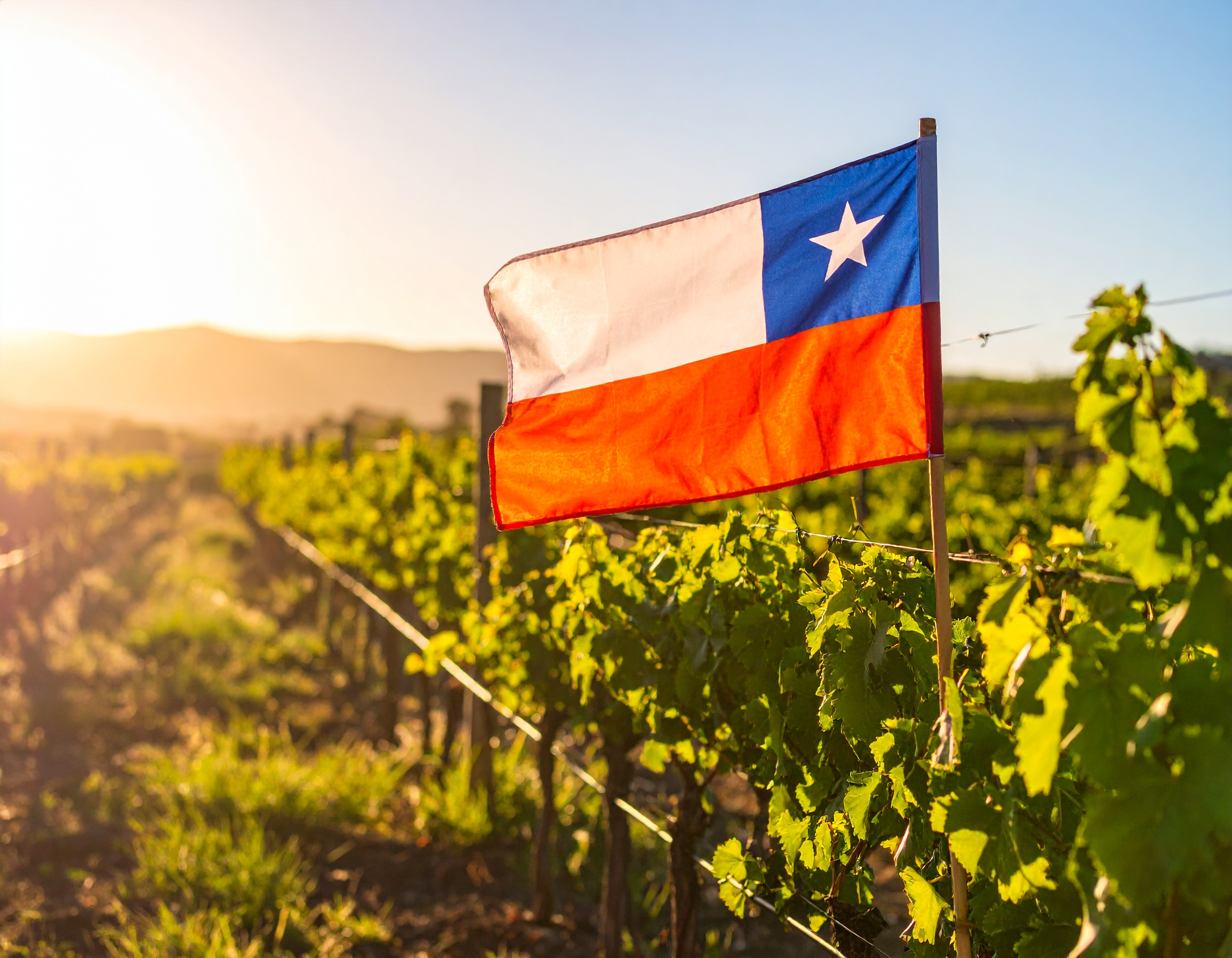
Chile is a country of captivating contrasts — from its arid deserts in the north to its lush, wind-swept valleys in the south, from coastal fogs to soaring Andean peaks. For decades, Chile has been one of the most consistent yet underrated wine-producing nations. Today, it is embracing its full diversity — of climates, soils, and grape varieties — to carve out an identity that is as bold and unique as its landscapes.
Geography: A Natural Haven for the Vine
Stretching nearly 4,300 km along South America’s Pacific coast and rarely more than 200 km wide, Chile is a viticultural anomaly. It is hemmed in by formidable natural barriers: the Atacama Desert to the north, the frigid Pacific to the west, the mighty Andes to the east, and Antarctic winds to the south. This isolation protects its vineyards from diseases like phylloxera, allowing the luxury of ungrafted vines and contributing to Chile's reputation for pure, untainted wines.
Climate: Cool Currents and Andean Air
Chile’s geography drives its extraordinary climatic diversity. Though much of the country has a Mediterranean-style climate, microclimates abound, influenced by:
- The Humboldt Current, which brings cold air inland, moderating the coast and central valleys.
- Andean altitude, which delivers cool nights, preserving acidity and structure in red grapes.
- Latitude shifts, from the sun-soaked deserts of the north to the cool, rainy south.
Chile’s wine zones now incorporate three transversal designations:
- Costa (coastal-influenced),
- Entre Cordilleras (valleys between the mountains),
- Andes (mountain-affected).
Each of these significantly impacts wine style and is now recognized on Chilean labels when 85% of grapes come from the designated zone.
Chile's Wine Regions: From North to South
Atacama & Coquimbo – Desert Elegance and High-Altitude Potential
Historically dominated by Pisco and table grapes, these northern regions are reinventing themselves.
- Elqui: A high-altitude oasis producing vibrant Syrah and Sauvignon Blanc.
- Limarí: Home to limestone soils, perfect for Chardonnay and mineral-driven whites.
- Choapa: A small area where the Andes and Coastal Ranges converge, offering both heat and elevation.
Aconcagua – Red Power Meets Coastal Cool
- Aconcagua Valley: Known for bold Cabernet Sauvignon, Merlot, and icons like Seña, which beat First Growth Bordeaux in the famed 2004 Berlin Tasting.
- Casablanca & San Antonio: Cool-climate havens for Sauvignon Blanc, Chardonnay, and Pinot Noir. Leyda Valley in San Antonio is particularly promising for expressive whites.
Central Valley (Valle Central) – The Beating Heart of Chilean Wine
Chile’s most historic and productive region, home to famous producers and flagship wines.
Maipo Valley
- Chile’s Cabernet Sauvignon capital.
- Notable subregions: Puente Alto, home to “Don Melchor” and “Almaviva.”
- Hosts giants like Concha y Toro and Santa Rita.
Rapel Valley (Cachapoal & Colchagua)
- Carmenère finds its spiritual home here.
- Apalta and Los Lingues: Elevated to DO status in 2018; known for premium Bordeaux-style blends like “Clos Apalta” and “Alpha M.”
- Purple Angel by Viña Montes showcases Carmenère’s potential.
Curicó & Maule
- Curicó: Gained attention after Miguel Torres set up operations here.
- Maule: Chile’s largest region, mixing bulk wine and heritage vines of País and Carignan. Dry-farming and old vines are making a comeback here.
Southern Regions (Sur) – The New Cool Frontier
- Itata & Bío Bío: Old bush-trained vines of País and Muscat of Alexandria.
- Malleco: Tiny and cool, showing promise with Pinot Noir and Chardonnay.
Austral Region & Beyond – Chile’s Final Frontier
In 2024, two new DOs were added:
- Rapa Nui (Easter Island) and Chiloé (Patagonia), pushing the limits of viticulture into previously unthinkable areas.
Grape Varieties: Classic Meets Rediscovered
Reds
- Cabernet Sauvignon: Still king, especially in Maipo and Colchagua.
- Carmenère: A Bordeaux refugee now thriving in its adopted land.
- Merlot, Syrah, Carignan, and País: All contribute to Chile’s red mosaic.
Whites
- Sauvignon Blanc: Zesty and tropical, often with herbaceous complexity.
- Chardonnay: From rich and oaky to taut and mineral (especially in Limarí).
- Muscat of Alexandria: Primarily for Pisco, but undergoing revival for table wines.
Wine Laws and Labeling
Chilean wine law, established in 1995, balances flexibility with integrity:
- 75% rule: Minimum for vintage, variety, and origin (though many follow 85% for EU alignment).
- Minimum ABV: 11.5% for all wines.
- Labeling Terms:
- Reserva / Reserva Especial: Minimum 12% ABV (oak aging required for Especial).
- Gran Reserva / Reserva Privada: Minimum 12.5% ABV with mandatory oak aging.
Sustainability and Innovation
Chile is a global leader in sustainability. Its dry climate minimizes disease, reducing chemical use. Many producers now embrace:
- Organic & biodynamic farming,
- Dry-farming (especially in the Maule and Itata Valleys),
- And low-intervention winemaking, particularly with old vine País and Cinsault.
Chile’s Sustainability Code is a model that integrates environmental, social, and economic criteria into certified winegrowing.
In Conclusion: Chile’s Wines, Chile’s Time
Chile is no longer just the land of dependable, value-for-money wines. It is a world of fine wine potential — from expressive terroir-driven whites to elegant, age-worthy reds. With a firm eye on tradition and a fearless approach to innovation, Chile is writing a new chapter, one vintage at a time.
It’s not just about geography or grapes — it’s about a country that has quietly, consistently, and now boldly earned its place at the global wine table.