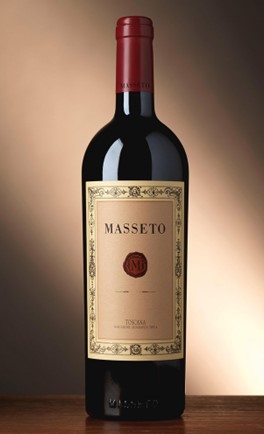
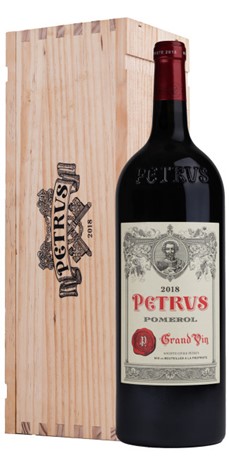
In the world of vineyard soils, one of the unique soil types is Blue Clay. A soil that produces two iconic wines: Petrus and Masseto. Let’s dive deep and know these two wines that sit pretty much on the top of the prestige segments of any wine list in the world.
Petrus
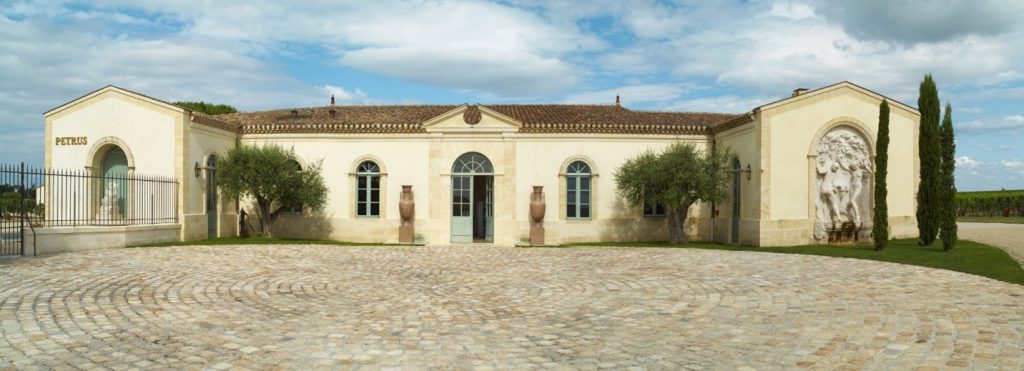
The oldest records involving the history of Petrus go back to the mid-1750s, making it one of the earliest established vineyards in Pomerol. Petrus shares its name with its location, the hill of Petrus. During the times of the ancient Romans, the property was owned by a Roman named Petrus. The logo for the wine found its inspiration from the Greek version of St. Peter, “Petros.”
Old records mention a purchase of vineyard land by Jacques Meyraud from the Chateau Gazin area owned by the Voisin family. The name Petrus officially saw light in 1837, while it was owned by Arnaud family. By the mid to late 1800s, Petrus was starting to become well-known. It was considered the one of the best wines in Pomerol, just after Vieux Chateau Certan and Trotanoy. In 1917, M. Sabin-Douarre, a former manager of Petrus purchased the property. How? No one knows this. It was Sabin-Douarre who created the Societe Civile du Chateau Pétrus. What happened next changed the history of Petrus, Pomerol, and Bordeaux.
Sabin-Douarre loved dining at the best restaurant in the Right Bank, l’Hotel Loubat. In 1923, Madame Edmond Loubat, the owner of the hotel began purchasing shares of Petrus from the Sabin-Douarre family. By 1929, she managed to purchase the remainder of the shares in Petrus, and Madame Loubat becomes the sole owner of Petrus and hence started the golden period of Petrus.
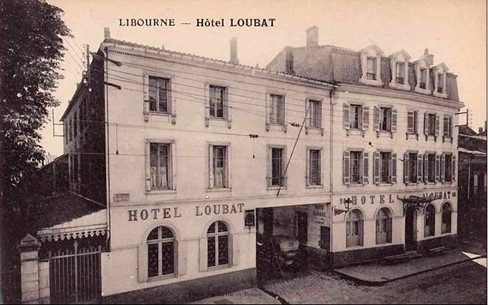
In the 1940s, Madame Loubat entered a contract with Jean-Pierre Moueix to handle the production and distribution of her wine. It was the combination of Loubat and Moueix that really gave Petrus the unparallel status it has today. They both knew Petrus produced the finest wine in the entire appellation.
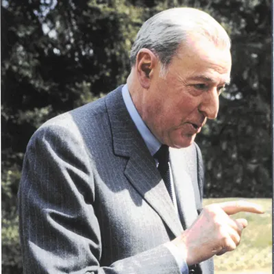
To help prove it, they began charging prices as high as the top Bordeaux from the Medoc. It was agreed by the partnership of Loubat and Moueix that Petrus would never sell for a price lower than Cheval Blanc from that point forward. If Petrus costs that much, it must be worth it, right?
At Madame Loubat’s passing in 1961, since she had no children, her nephew and niece each inherited 50% of Petrus.
However, she also bequeathed a share of Petrus to Jean Pierre Moueix, allowing him to continue helping to run, promote and manage Petrus, as well as sell the wine all over the world.
Following the death of Madame Loubat, Jean Pierre Moueix brought in the famed Professor, Emile Peynaud to help with the winemaking at Petrus. That arrangement lasted only a few years, due to the busy schedule of Professor Peynaud. In 1964, Mouiex became the Sole owner of Petrus.
The Vineyard
The 11.5-hectare Petrus vineyard is planted to 100% Merlot. During the 1990s and into the 2000s, about 1/2 a hectare was reserved for Cabernet Franc, making the vineyard plantings about 95% Merlot and 5% Cabernet Franc. However, the Cabernet Franc was not used in most vintages.
Today, all the Cabernet Franc vines have been removed and replaced with Merlot. This is quite different than what Petrus was planted to in the 1960s and 1950s, and perhaps before that. In those days, Petrus was planted closer to 80% Merlot and 20% Cabernet Franc.
The Petrus vineyard is situated at the top of the highest elevation on the Pomerol plateau at 40 meters and is further divided into 12 parcels. This offers natural drainage. More importantly, the vineyards of Petrus have soil and terroir unique to the estate. The clay in the Petrus vineyard is what makes the wine so special and unique.
In fact, this type of clay does not exist in any other vineyard in the world! Petrus is the only hill made entirely from clay. This is because clay usually erodes with time and falls to the bottom of the slopes, which is not the case with the soils of Petrus.
The Blue Clay of Petrus
To start with, the clay soil of Petrus is around 40 million years old. The gravel surrounding plateau is only around a million years old.
But it’s the unique subsoil that is not found in any other vineyard. The soil is loaded with very dense, deep, dark, blue clay. The clay is so hard that the roots cannot penetrate. What happens is the vines quickly grow sideways to find nutrition as the vines do not go deeper than 60 to 80 centimeters. The water molecules can penetrate the interlayer, molecular spaces of the clay.
When the dry summers arrive, the vines tend on the much-needed moisture. The clay of Petrus produces grapes with the highest level of tannins in Pomerol and most of Bordeaux, at the same time, tannins that are among the softest in texture.
The patch of blue clay on the Pomerol plateau is about 20 hectares in total. Petrus is unique as its entire 11.5-hectare vineyard is right on top of the clay. Neighboring vineyards only have a portion of blue clay in their soil.
While the average age of vines is kept at 40 years, the oldest vines of Petrus were planted in 1952.
Masseto
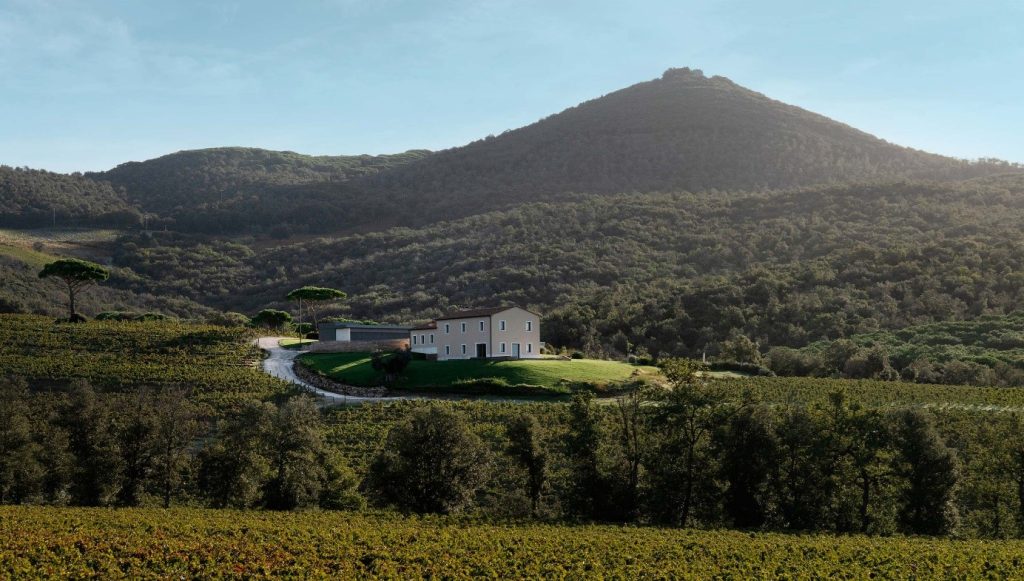
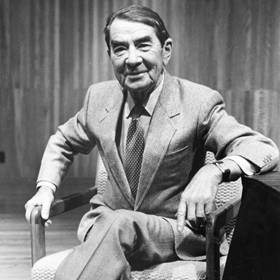
Masseto’s history dates to the early 1980s; famed winemaker André Tchelistcheff, was one of the first to recognize the unique terroir of the Masseto plot. He identified this hill of almost 7 hectares with blue clay soil as the perfect place for Merlot. a former quarry, with its blue clay and rocks, sitting around 120 meters above sea-level. Tchelistcheff worked as a consultant to the estate until 1989 and was subsequently succeeded Michel Rolland.
The layers of clay are rock-hard in some places, and they look like solid boulders. The Italian name for rock is “masso”, hence the name.
Another terroir element that is an essential of Masseto is the Tyrrhenian Sea; just 10 kms away. In summer, the water reflects the sunrays, indirectly giving the vines even more sun. The sea provides a subtle cooling breeze. The calming effect of the breeze causes the ripening process to slow down and take longer, ensuing in the perfect balance between tannins and acidity.
The vineyards of Masseto are divided over three sub-plots: Junior, Centrale, and Alto. Each with its own characteristics together form the unique character of the Masseto wine.
The Alto vineyard is the highest vineyard and consists of blue clay, sand, and pebbles. The central part of the hill has the biggest share of blue Pliocene clay. This plot makes Masseto strong and concentrated and this is considered the heart of the blend. The power and almost intimidating tannic structure of ‘Masseto Centrale’, the firmer and trimmer texture of ‘Masseto Alto’, and the softer character of the lower part of the vineyard which we like to call ‘Masseto Junior
Beneath the earth, roots find their way into the tract of million-year-old blue clay on which the vineyard now sits. Once seabed, it is filled with minerals and fossils of the life that was.
The three influences of Sea;
ABOVE, AROUND AND BELOW. SEA. WITHOUT IT, MASSETO WOULD NOT EXIST.