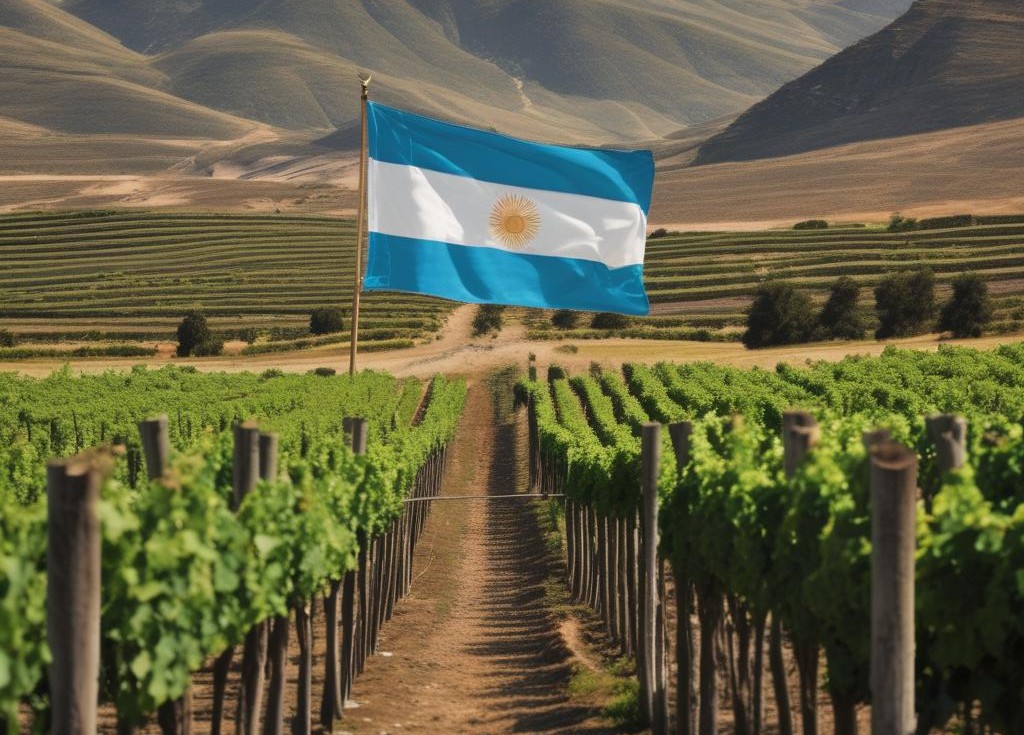
From the sun-drenched slopes of Mendoza to the cool, chalky soils of Patagonia — discover Argentina’s most iconic grapes, wine regions, and what makes them truly unique.
Climate & Terroir: Nature’s Favorable Challenge
Argentina’s wine regions are situated mainly on the western edge of the country, in the foothills and plains along the Andes Mountains. This gives vineyards a continental climate, characterized by:
- Hot summers and cold winters
- Very little rainfall, thanks to the Andes blocking wet air masses (a phenomenon called the rain shadow effect)
- Zonda Winds: Dry, hot winds that blow from the Andes in spring and early summer. They help prevent mildew and disease but can damage flowering vines.
- Irrigation from snowmelt: Since rainfall is scarce, water from melting Andes snow is channeled into vineyards via ancient furrow systems and modern drip irrigation.
Most vineyards are planted between 900 and 3,000 meters above sea level. This elevation moderates heat, allows longer ripening seasons, and contributes to vibrant acidity and flavor concentration in grapes. However, spring and summer hailstorms are a regular challenge, sometimes damaging the vines.
Another advantage: due to the country’s isolated locations and low humidity, fungal diseases are rare. And unlike many wine regions around the world, phylloxera (a vine pest) is not a major issue, so most vines grow on their own rootstock.
Argentina’s Main Grape Varieties
Red Grapes
- Malbec: The country’s flagship grape. It thrives in Mendoza’s sun and altitude, producing wines with dark fruit, floral notes, and smooth tannins.
- Bonarda: Argentina’s second most planted red, now identified as Corbeau from France (known as Charbono in the US).
- Cabernet Sauvignon: Gaining popularity, often blended with Malbec.
- Syrah, Merlot, and Tempranillo are also widely planted.
White Grapes
- Pedro Gimenez: The most planted white grape, used mainly in bulk wine. It is not related to Spain’s Pedro Ximénez.
- Torrontés: Argentina’s signature aromatic white grape. Its floral and citrusy style shines especially at high altitudes.
- Chardonnay: Often grown in the cool-climate Uco Valley.
- Chenin Blanc: Mostly found in southern Mendoza.
Pink-Skinned Grapes
About 30% of Argentina’s vineyard area is planted with pink grapes like Cereza, Criolla Chica, and Criolla Grande, traditionally used in mass-market wines.
Reserva & Gran Reserva Designations
In 2008, Argentina introduced two quality tiers:
- Reserva:
- Whites: Aged a minimum of 6 months
- Reds: Aged a minimum of 12 months
- Gran Reserva:
- Whites: Aged at least 12 months
- Reds: Aged at least 24 months
Both designations include yield limits, encouraging winemakers to focus on quality over quantity. Only wines made from premium grape varieties are eligible.
Major Wine Regions of Argentina
Argentina’s wine areas are divided into three main zones: Northwest, Cuyo (Central), and Patagonia (South).
1. Northwest (Salta, Catamarca)
Salta
- Home to the highest vineyards in the world, reaching up to 3,000 meters.
- Torrontés performs exceptionally well here due to the cool nights and intense sun.
- Cafayate is the key subregion, producing both whites and elegant reds like Malbec and Cabernet.
- Notable producers: Etchart, Yacochuya, and Susana Balbo’s Crios.
Catamarca
- South of Salta, this small region grows Torrontés, Syrah, and Malbec.
2. Cuyo (Mendoza, San Juan, La Rioja)
Mendoza
- Produces over 75% of Argentina’s wine.
- Divided into: North, East, Central (Primera Zona), South, and Uco Valley.
- Soil: Sandy alluvial over clay; well-drained and disease-resistant.
- Subregions like Luján de Cuyo DOC and Maipú are famous for Malbec.
- Uco Valley is known for its high-elevation Chardonnay and Sémillon.
- Leading producers: Catena Zapata, Achával Ferrer, Dominio del Plata, Bressia.
- Traditional and modern irrigation techniques ensure vine survival in this desert-like climate.
San Juan
- Second largest wine region with over 45,000 hectares under vine.
- Known for Syrah, Bonarda, and fortified wines.
- Main valleys: Tulum, Zonda, Ullum, Pedernal.
La Rioja
- Northernmost province in Cuyo.
- Famatina Valley is the heart of wine production.
- Main grapes: Torrontés and Malbec.
3. Patagonia (Río Negro, Neuquén, Chubut, La Pampa)
- Cooler climate and longer ripening seasons = elegant wines.
- Ideal for Pinot Noir, Merlot, Malbec, and Sémillon.
- Soils are chalky, and elevation plays a lesser but still important role.
- Top producers:
- Bodega Chacra: Premium Pinot Noir
- Bodega Noemía: Boutique Malbec
- La Pampa, just north of Río Negro, is emerging as a new region of interest.
Argentina’s Competitive Edge
What sets Argentina apart in the wine world?
- High-altitude vineyards enhance freshness and complexity.
- Low disease pressure means fewer chemicals in the vineyard.
- Minimal pollution in remote areas preserves terroir.
- Dry climate and sunshine lead to ripe, healthy grapes.
- Own-rooted vines (not grafted) allow for authentic grape expression.
In Conclusion
Argentina’s wine story is one of nature, resilience, and innovation. From the floral Torrontés of Salta to the bold Malbecs of Mendoza and refined Pinot Noirs of Patagonia, the country offers something unique for every wine lover. With its mix of tradition and forward-thinking viticulture, Argentina continues to earn its place among the world’s most admired wine-producing nations.