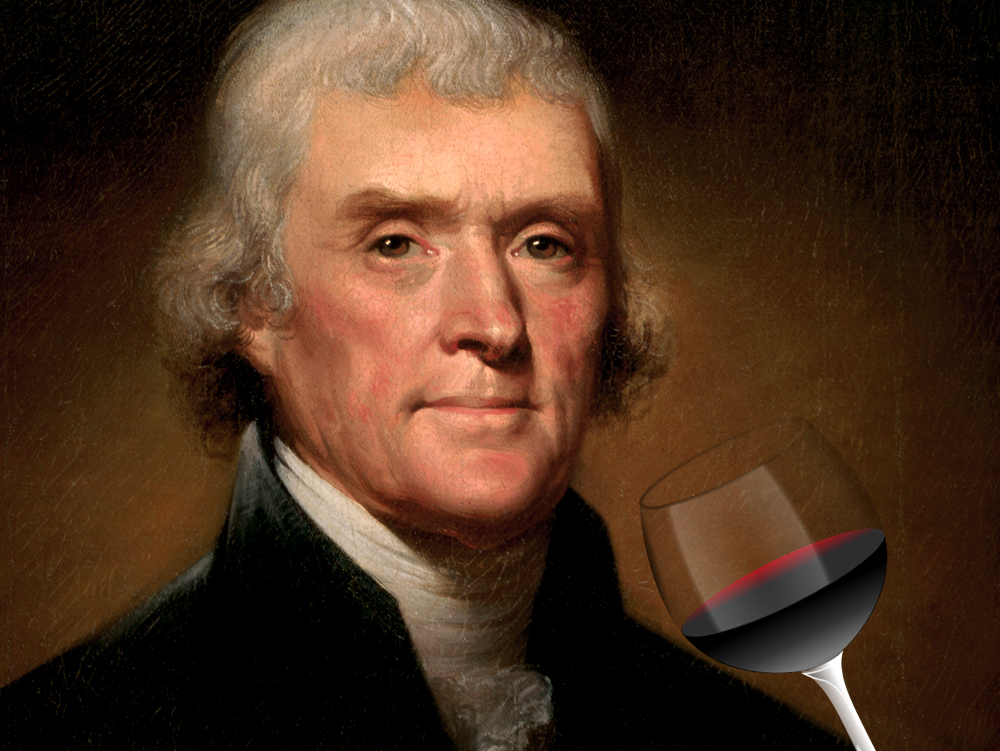
Wine has been a choice of indulgence for many. In the timeline of wine history, the
world has seen some prolific wine lovers and collectors. So, let’s go back in
time and discover about a few prolific wine drinkers and the wines they loved.
Thomas Jefferson
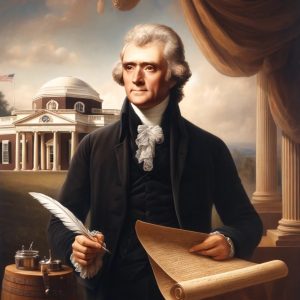
Other than being one of the founding fathers and President of the United States of America, he must be considered one of the most prolific collectors of wine. A man who didn’t buy just to drink, but also for the love of it. Thomas Jefferson, in 1818, claimed that "in nothing have the habits of the palate a more decisive influence than in our relish of wines."
Jefferson, like most of his compatriots, had been a consumer of Madeira and port, with the occasional glass of "red wine." It was in 1787, when, as Americas minister to France, he took a wine trip across famous wine making regions in Southern France and Northern Italy. The 3,000-mile journey included stops at Burgundy’s Meursault and Montrachet Condrieu, and Northern Italy’s Turin. When Jefferson returned to France, heading north to Bordeaux, he sampled the region's best wines, including Château Margaux, La Tour de Segur (Château Latour), Haut Brion (Château Haut-Brion), and Château de la Fite (Château Lafite-Rothschild).
His love of collecting wines started in Paris, and he went ahead to collect hundreds of wine bottles. Jefferson’s travel diaries also include tasting notes on different types of wines, grapes, and vintages. “These wines are in perfection from two to ten years old, and will even be very good at fifteen,” Jefferson wrote while traveling in Champagne. “1775 and 1776 next to that.
The bottles and casks Thomas Jefferson had ordered during his wine tour began arriving at his door, adding to the almost 600 bottles he already had possessed. Jefferson’s cellar grew by 124 bottles from Montrachet, 124 bottles from Meursault: two of the most desirable Burgundian Whites. Around 250 bottles of Frontignan Muscadet from Languedoc Roussillon and around 120 bottles of Château Margaux.
One of the most legendary bottles ever sold at an auction was sold for $157,500 on the 5th of December 1985 by Christies.
A handblown dark-green glass bottle capped with a seal of thick black wax. It had no label, but etched into the glass in a spindly hand was the year 1787, the word “Lafitte,” and the letters “Th.J.” and 1787 vintages, including Lafite, Margaux, Yquem, and Branne-Mouton. The bottle came from a collection of wine that had reportedly been discovered behind a brick cellar wall in an old building in Paris. The wines bore the names of top vineyards—along with Lafitte (which is now spelled “Lafite”), there were bottles from Châteaux d’Yquem, Mouton, and Margaux—and those initials, “Th.J.” Jefferson’s favorite wine was and is one of the top wines in the world: Chateaux Margaux. There is little doubt that Jefferson is America’s greatest wine aficionado.
Hermann Göring
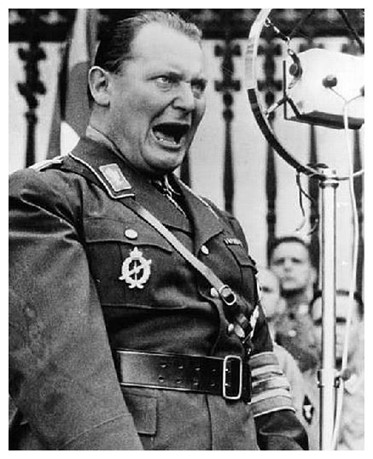
Field Marshall Hermann Göring, a daunting figure in the history of humankind, was a ruthless Military Commander who was one of the only two to lead the Luftwaffe for Adolf Hitler. Other than being one of the most infamous personalities in history, he was also a lover of fine wine.
A collection that was the result of looting and forced theft. The man fulfilled his love of wine using his power and behind the curtains of World War II. His love was inclined towards fine Bordeaux and German wines and his collection was the result of his plunder of Bordeaux. Housed inside more than 100 kilometers of moldy cellars at the Cricova winery in Moldova is reportedly Hermann Göring's personal wine collection; most of it is an assortment of vintages that were brought by the Red Army from Berlin in 1945.
The man had a special liking for top shelf Bordeaux wines, specifically Château Lafite and Mouton Rothschild.
In June 1940, an emissary from Field Marshal Hermann Göring asked to see the cellar of La Tour d’Argent. They carted off 80,000 bottles in the first months of the occupation, unaware that 20,000 more bottles had been hidden behind a false brick wall built hastily by Claude Terrail (owner).
George Washington
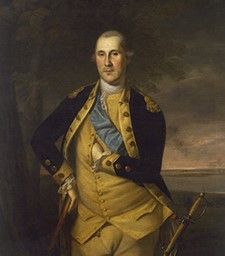
It’s not too far away from reality to think that one of the most influential personalities of modern history was an ardent connoisseur of wine. One of his guests at Mount Vernon, an abode designed by him, described how at a meal “the general with a few glasses of champagne got quite merry and, being with his intimate friends, laughed and talked a good deal.” He was known for his love for Champagne, Claret, Burgundy, Port and Madeira. The General drank so much Port that his dentures would stain such a dark purple that they’d appear black.
The first order for Madeira in George Washington's correspondence dates to the spring of 1759, when he asked his London agent, Robert Cary & Company to "Order from the best House in Madeira a Pipe of the best old Wine, and let it be Secured from Pilferers. A pipe held approximately 126 gallons of wine. About a year later, Washington transported a pipe of wine to Mount Vernon from Alexandria. "
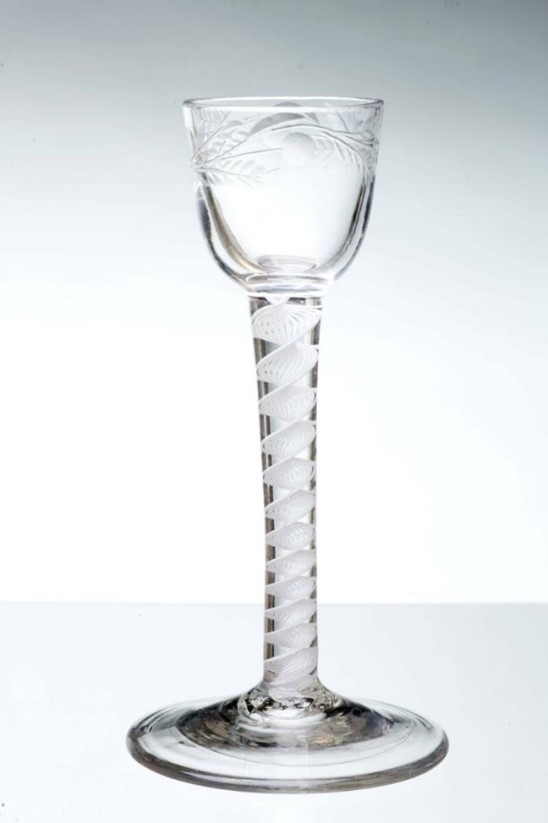
Like other men of his social class, he had the money and connections to acquire champagne for his table. He may have first become acquainted with champagne in the palace in Williamsburg, where the royal governor, Lord Botetourt, is known to have had three bottles stored "In the Vault" at the time of his death in 1770. He is known to have purchased 458 bottles of Burgundy and Champagne in 1794.
Winston Churchill
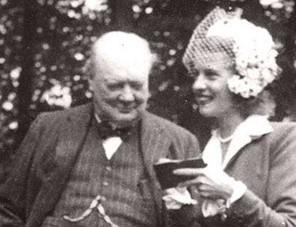
As Mr. Churchill once famously said; We live very simply—but with all the essentials of life well understood and provided for—hot baths, cold Champagne, new peas and old brandy.”
Champagne was one of his staple beverages and most particularly, Pol roger. They even went ahead and named a special cuvée in his honor. The man is known to have consumed 42,000 bottles of champagne in his lifetime.
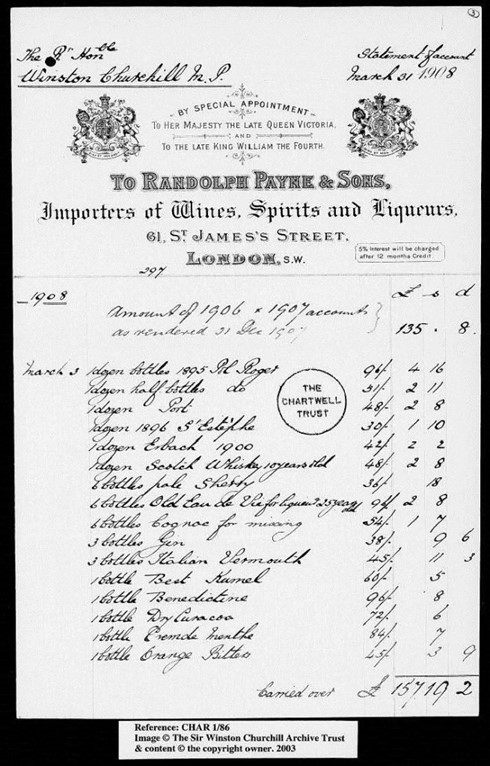
Churchill’s love affair with Pol Roger began in 1908, the same year he married his other great love, Clementine, and lasted until his death in 1965 at the age of 90. And, when Churchill fell in love, his love knew few bounds. He famously consumed 2 bottles of Pol Roger in a day.
In 1908 alone, Churchill purchased over 100 bottles and over 80 half-bottles of Pol Roger 1895 vintage champagne, plus around 50 half-bottles of the 1900 Pol Roger vintage.
Churchill never visited the Pol Roger winery during his lifetime, but he managed to meet a prominent member of the family, Odette Pol Roger, at a party at the British Embassy in Paris in 1944. At that event, he served Pol Roger 1928, which became his favorite vintage until he depleted it and then switched to 1934. The friendship that developed at that event between Odette and Churchill would withstand throughout his life. Odette would send Churchill a case of champagne each year on his birthday.
Churchill was also known to have loved other wines; red wines from Château de Bellevue and Vina Pomal, Graham’s Port and Sherries from Lustau and Delgado Zuleta.
A published routine of Churchill is mentioned as below:
7.30 — Wake up, remain in bed, eat breakfast, read newspapers, work, glass of whiskey and soda.
11:00 — Out of bed, stroll around garden supervising estate, whiskey and soda.
13:00 — Multi-course lunch, with an imperial pint of Champagne.
15:30 — Work from study, glass of cognac.
17:00 — Hour and a half nap, a habit acquired during his time in Cuba as a journalist.
18:30 — Wake up, bath, dress for dinner.
20:00 — Lengthy dinner with guests, imperial pint of Champagne.
00:00 — Work in study, more cognac. 01:00–03:00 — Bedtime.
Josef Stalin
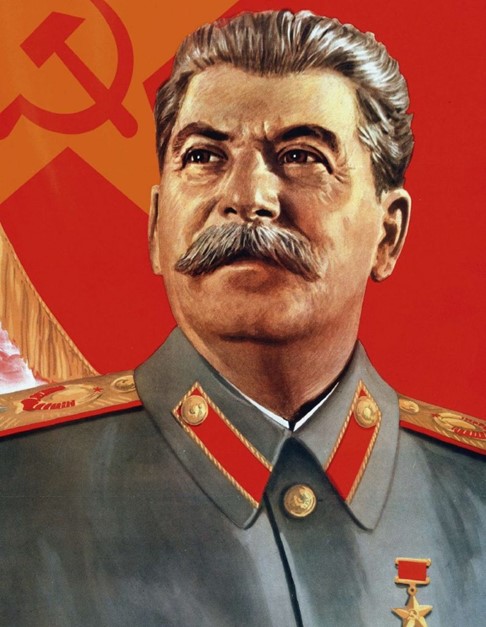
Unlike anyone else, the man could drink a lot and never got drunk. He was famously known to have hosted Soirees where vodka and wine used to flow like water. Parties where he would try to find out what the Yea-sayers really felt about him, as under the influence of alcohol there was a lot that was revealed.
Little did anyone in the modern wine world know that Stalin had one of the greatest wine collections in the world. Situated in the underground cellars of Tiblisi, Georgia, lies one of the greatest wine collections ever to exist. The collection belonged to Czar Nicholas II, the last Czar of Russia. The wine had become the property of the state after the Russian Revolution of 1918, during which Nicholas and his entire family were executed.
Now owned by Stalin, the wine was cautiously removed to a remote Georgian winery when Stalin was concerned the advancing Nazi army might overrun Russia, and inevitably loot it. Half a century later, the wine was speculated to be hidden underground and off any known map.
With bottles of 1877 Château Lafite Rothschild, 1891 Château d'Yquem, 1899 Château Suduirant and 40,000 other ancient-vintage great wines of the world, the cellar is unlike no other.
It was an investigation by a wine merchant, John Baker, in Sydney, Australia. He was sent a mysterious list of wines that were more than 100 years old and hence his journey began. It was his and Kevin’s (friend and number 2) journey on an Indiana Jones Treasure Hunt.
The list had some names that were recognizable and many names that were just gibberish. It was later that they had the revelation that the names were written as per the phonetic representations. Being reasonable, a city so far away from France, it loved and understood its own language rather than understand a lot of English, keeping aside French.
Ikem was Yquem.
Margot was Margaux
Clatesterne was Cos d Estournel.
Heresbrin was Haut Brion.
1870-something Yquem, Yquem from 1847 (pretty much the best vintage of 19th Century), Coutet 1864, a 1919 Margaux, 1956 Salkhino; 1899 Château Suduiraut ; a bottle of which fell and broke during this exploration. A total of around 217 Yquems from the 1800s and 1900s exist in that cellar.