Wines are always personal choices, but there are wines which have been through the test of time and have been part of the timeline of winemaking. When it comes to Burgundy there are many exceptional wines. But these four for me are the ones which have a cult status not because just a demand created but because they displayed top notch quality and have been the top of the line for decades and have been exceptional throughout the timeline of Burgundian winemaking.
Domaine de la Romanée Conti
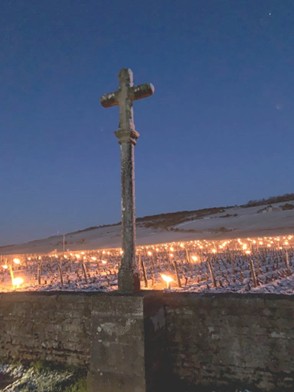
The pinnacle of Burgundian might. Romanée Conti is, if not the most, is surely one of the most coveted estate and wine in the world. In the heart of Vosne-Romanée, we find the legendary Domaine de la Romanée-Conti, named after the vineyard, itself; often referred to simply as DRC.
The roots of Domaine de la Romanée-Conti date back to the 13th century; the earliest mentions being from 1232. The vineyard was then tended to and owned by the Monastery of Saint-Vivant de Vergy. Even back then, when the vineyard was still called "Cloux de Saint Vivant", it was considered one of the absolute best parcels. The wines from here were dealt at more than 6 times the price of the wines from Clos de Vougeot, the largest Grand Cru vineyard in the area.
1631, the property was put into care by owner Jaques Venot under the care of his Son in Law; Philippe de Croonembourg and daughter Jeanne Venot. This is when the vineyard took the name “La Romanée" (1651). It is not related to the current neighboring La Romanée.
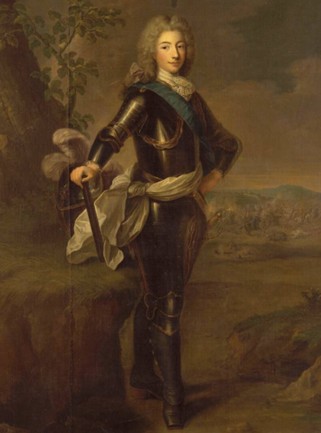
1760 saw change in ownership, when it was bought by the Prince of Conti, Louis François I de Bourbon, who added "Conti" to the name, and from here Romanée-Conti is referred to as the vineyard we know today. Along with this he also bought two neighboring parcels called, “au miex Caillot”, to make a winery, cellars and mansion for his manager who was also the winemaker. That parcel is now known as “la Goillotte”; which produces Domaine Prieure Roch Vosne- Romanée Les Clous, Monopole.
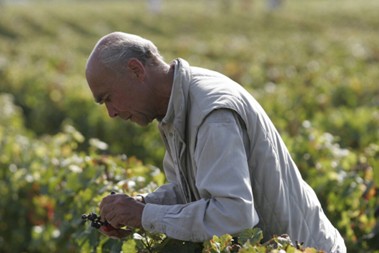
The de Villaine family has owned the Domaine de la Romanée-Conti since 1869. Next important period was the beginning of the Leroy and Villiane partnership. July 31, 1942, saw Henri Leroy buying shares in Romanée Conti. In 1950 Henri de Villaine becomes the Managing Partner. 1974 saw Lalou Bize-Leroy and Aubert de Villaine as Managing partners; the two took Romanée Conti to new heights and defined I to today’s generation.
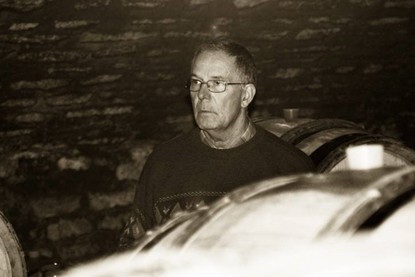
Winemaking has been inherited as well. Bernard Noblet has been a cellar master all his life, and his son is ready behind the scenes to take over. Something that is being responsible for the continuity of the style of wine.
The wine is made with minimal intervention and has been an organic production for a long time. It’s the terroir and vineyard that produces this exceptional liquid. In the vineyards, the concept of 'massal-selektion ' of the old clones from the pre-1945 Romanée-Conti vineyard, the last harvest before the vines were replaced, is used. These clones have their own character and yield extremely little and highly concentrated fruit.
The result is that in most of the estates' vineyards you harvest about half of what is allowed, but you get wines with a perfect balance. These clones are still being refined. As always with vineyard work, it is a long-term process that spans several generations. This is one of the great strengths of a family-owned estate, as you have better control of the calm process.
Traditional methods are followed to full satisfaction of the requirements in the cellar. Aubert de Villaine is in favor of letting the must work as naturally as possible, as this gives the best expression of the terroir on which the wine grows. While they are very traditional, However, they experiment with temperatures, fermentations, percentages of stems in the must during fermentation, etc.
All vineyards are hand harvested by the same team year after year. After arriving at the winery, the grapes are sorted again to make sure that only healthy grapes are taken. There is no cold fermentation, so the must lay naturally until the actual fermentation begins after a few days. Every year, the wine is fermented in large old wooden barrels before being transferred to brand new barrels after a little more than 20 days. These barrels are made by Francois Frere, the local cooper in Saint-Romain. The wood is selected by DRC, the wood dries for 3-4 years before they are built into 228-liter barrels. The wine lies on the barrels for just over two years before being bottled.
The best vintages: 1929, 1945, 1959, 1969,1971, 1978, 1985, 1988,1989, 1990, 1999, 2002, 2005, 2010, 2015 and 2019
Domaine Armand Rousseau Chambertin
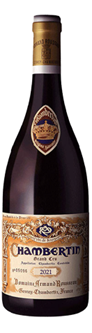
It was a Monsieur Bertin, who planted a grape variety in his field and in the of the monks of Bèze. The wine obtained from the vineyards was deemed perfect and the people named the vineyard, Champ de Bertin; ‘the vineyard belonging to Bertin", as an honour to its owner itself; the same consequently became, Chambertin.
The words Armand Rousseau and Gevrey Chambertin are synonyms with each other. In legacy, holdings and quality it’s one of greatest Burgundian domains of all time. An Iconic wine with fantastic packaging
Armand Rousseau (1884 – 1959) inherited some vineyard plots when he turned 18 in 1902, and this was the foundation of the great Domaine. He came from a family of vignerons, coopers and local wine merchants, and additional vineyards follow when he married in 1909.
After his marriage and after the war Armand Rousseau quickly began to expand the vineyard portfolio. According to the estate website, plots in Charmes-Chambertin followed in 1919, plots in Clos de la Roche and Chambertin in 1920 very quickly. It was the beginning of the baking of one of the legendary estates of Burgundy.
Around 1930’s he became one of the few firsts to start his own bottling plant in winery premises so that he didn’t have to be dependent on negociants on business.
2.55 Hectares of Chambertin. The vine planting is traditional with about 11,000 plants per hectare. The grape come from three different plots in the Chambertin inclined East as well as from a plot called Larrey, planted North-South, located just at the edge of the wood. The configuration of the plot is not favorable to mechanization, the work of the soil is done with the help of a horse and a plow. On average, the vines are 45 years old. In the cellar, the wine is fermented in steel tanks with natural yeast.
Personally, for me, if not anything else; it’s the most beautiful wine label in all Burgundian wines.

Domaine Leroy Musigny Grand Cru
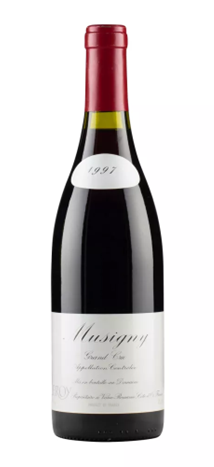
The remarkable journey of Leroy's success story begins in 1868 with the establishment of a negociant business, Maison Leroy by François Leroy. It was under the stewardship of, François’ great-granddaughterLalou Bize-Leroy, who joined the family venture in 1955, that Maison Leroy truly began to redefine winemaking excellence.
Lalou's was a visionary. She insisted on aging wines for an extended period, far longer than most contemporaries, before their release. This commitment to quality was followed by her rigorous selection process. Lalou would personally taste hundreds of wines blind each year to ensure that only the best carried the Maison Leroy label, a tradition she upholds to this day.
Domaine Leroy owns 4 plots of Musigny: two plots in the central part of Les Musigny, and 2 plots in the lower northern part of Les Musigny.
The history of these plots is a bit complex, as they were acquired separately. Whereas the northern plot has been under Leroy ownership since before Domaine Leroy was established in 1988, the southern plots in the central part of Les Musigny were acquired in 1990 after the formation of the Domaine.
It was crucial for Lalou Bize-Leroy to stop using pesticides, fertilizers, insecticides and herbicides as she believed, and still believes today, that such products kill life in both the soils and the vines. Her decisions soon resulted in lower yields and led many of her neighbours to criticize her approach.
Ignoring all critics, Madame Leroy chose to explore further her beliefs and quickly moved to biodynamic farming as a holistic system from beginning to end. It’s her pruning and tressage techniques that ensure a lower yield and a very highly concentrated fruit.
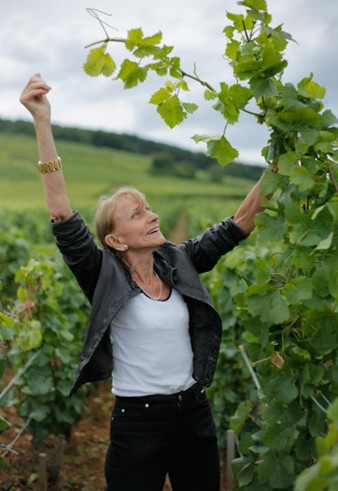
At the vineyard the grape bunches are thoroughly sorted to have a proportion of stemmed and destemmed grapes. A team of 40 people work together meticulously to have the balance from a fully destemmed and non-destemmed wine. The grapes are put into tailor-made wooden fermentation vats that fit a specific parcel of vines. The vinification is driven to express the terroir of each parcel to the best. Fermentation can reach 33°C to allow more extraction of flavours, and only indigenous yeasts are in operation. The wine is then transferred to casks with its lees, reds and whites are all matured in new oak barrels.
Every stage of the vinification is driven by the desire to preserve each terroir’s identity. The temperature of 100% of the barrels come from the François Frères cooperage. Every year, Lalou Bize-Leroy receives the very best oaks coming from the rarest forests in France. Wines are racked in the middle of their élevage and are bottled without fining or filtering.
With this level of attention to detail it’s not surprising that year after year the Domaine produces such exceptional wines.
Henri Jayer Vosne-Romanee Cros Parantoux
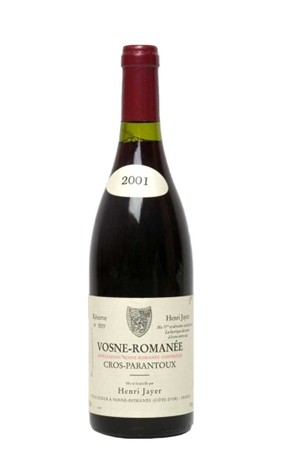
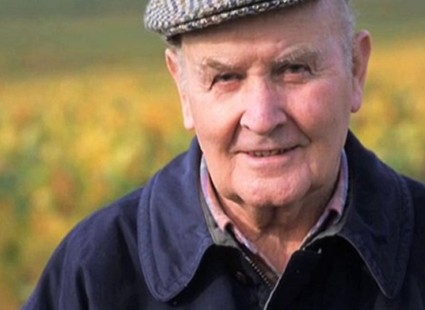
Henri Jayer has been one of the greatest names of the Burgundy vineyard. Born in 1922, he was only 17 when the Second World War began. With the beginning of WWII, Henri’s brothers went to fight, leaving the sixteen-year-old to look after the family’s holdings. Marriage to a winemaker’s daughter, Marcelle Rouget, and oenology teaching furthered a love for viticulture in him and following studies in Dijon; his studies were over but spotted by René Engel.
At a time when wine growers used only experience, Henri was one of the first to understand and master vinification. After the War, the eldest of the family took over the family land, the second did a course in forestry, and Henri, once again helped by René Engel, obtained some rented farming land in Vosne (including Richebourg).
He bought more empty land in 1951 which he began to reclaim as wine territory. This useless land was the now-holy Cros Parantoux. A plot of land which gave him the name of ‘Master of Pinot Noir.
Cros Parantoux is a mythical vineyard, with a reputation created of a Grand Cru wine in Premier Cru Bottle. With a location just above and next to Richebourg this 1er cru is regarded as something very special.
Cros Parantoux in Vosne-Romanée, being used to grow Jerusalem artichokes, but that was how this tiny Premier Cru was used during the Second World War. Not that it had had a distinguished past in the decades prior to that. It had been left uncultivated since phylloxera devastated the region in the late 19th century – it was neglected as a small piece of land that would need too much effort.
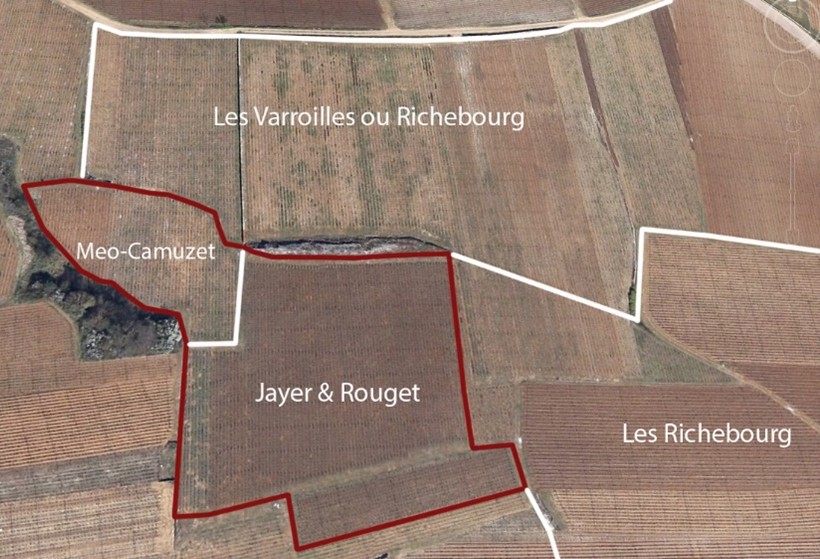
The future of the vineyard changed after the Second World War. Madame Noirot-Camuzet, asked the young Henri to look after her vineyards, in return for which he would be a sharecropper, keeping half of the harvest for himself.
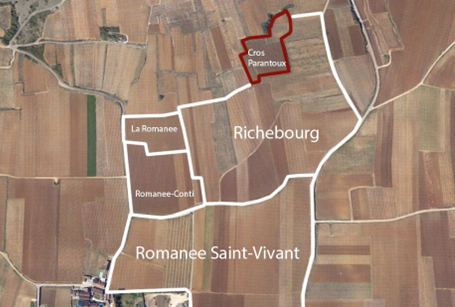
Jayer acquired the first plot of Cros Parantoux in 1951 from and began to replant the terroir in 1953. The bottom of this vineyard consisted only of a shallow clay limestone layer, poorly suited for wine growing. The vineyard in Vosne Romanee also had a bad reputation and was considered very labor intensive. Jayer famously used dynamite to blow holes in which he planted the roots of the vines.
During the next twenty years he acquired further plots, until he owned equivalent to a bit more than 70% of the 1.01 ha climat. The remaining 0.2950 ha was owned by the Camuzet Family, which was on a share cropping basis with Henri Jayer. Indirectly he worked the whole of Monopole till 1985.
He used to sell most of the wine to negociants. Henri Jayer did however not bottle Cros Parantoux separately before 1978. It the first vintage of Henri Jayer Cros Parantoux –and possibly the first wine to be labeled Cros Parantoux. Prior to 1978 the wine from Cros Parantoux was likely sold as Vosne-Romanee village. It was indicated that a very large percentage of the 1976 Vosne-Romanee village from Jayer was in fact produced on Cros Parantoux.
Jayer is believed to have invented many of the winemaking techniques which now characterise top-end Burgundy. He championed old vines and low yields to produce concentrated fruit. He is thought to be the first to employ a cold soak – macerating de-stemmed fruit for five to seven days prior to fermentation. The wines were fermented in cement and aged in 100% new oak for 18 months.
Best Vintages: 1978, 1985, 1980, and 1986