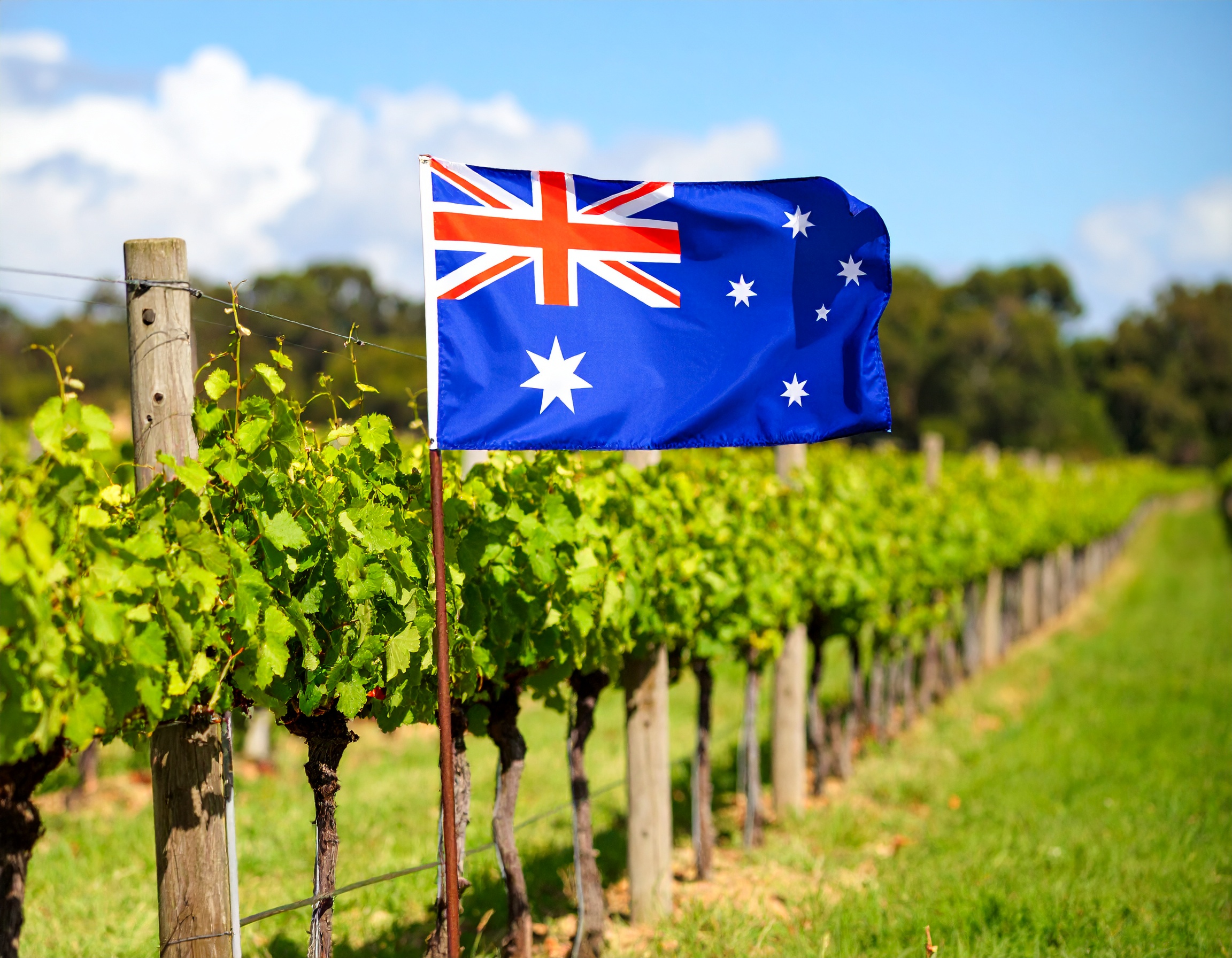
Australia has developed into one of the world’s most influential New World wine-producing countries. From commercial-scale operations in the warm inland regions to premium-quality wines from cool-climate zones, Australia offers a diverse and sophisticated landscape shaped by geography, technology, and innovation.
I. Geographical and Climatic Overview
A. Latitude and Vineyard Distribution
- Australia’s vineyards are primarily located between 30° and 40° south latitude — comparable to the classic wine latitudes of Europe.
- Viticulture is concentrated in the southern coastal regions due to the country’s generally hot and dry continental climate.
B. Climatic Influences
Australia is predominantly warm, but microclimates vary significantly due to:
- Altitude: High-altitude regions like Orange and Adelaide Hills benefit from cooler growing conditions and significant diurnal range.
- Proximity to Ocean: Regions such as Margaret River (Indian Ocean) and Mornington Peninsula (Bass Strait) experience cooling maritime influences.
- Ocean Currents: The cold Southern Ocean plays a moderating role in climates of southern and coastal areas.
- Wind and Rainfall: Prevailing winds bring some rainfall to western and southern regions, though most inland areas remain dry.
C. Irrigation and Water Use
- Due to limited rainfall during the growing season, irrigation is essential, particularly in warmer inland regions like Riverland and Murray Darling.
- Drip irrigation systems are widely used for water efficiency.
- Water rights and management are governed under regional and national frameworks, and climate change is intensifying pressure on water availability.
II. Viticulture and Vineyard Management
A. Vineyard Scale and Mechanization
- Large-scale vineyards in warm inland areas are highly mechanized, allowing efficient canopy management, harvesting, and spraying.
- Smaller producers in cooler zones may use hand-harvesting, lower yields, and more manual intervention to improve quality.
B. Disease and Pest Management
- Low humidity in many regions limits the spread of fungal diseases; however, downy mildew and powdery mildew can still pose risks.
- Phylloxera is present in some parts of Victoria but not widespread. Most vines are grafted onto resistant rootstocks as a precaution.
C. Canopy and Yield Management
- Vine training is typically on VSP (Vertical Shoot Positioning) trellises to facilitate mechanization and optimize sunlight exposure.
- Yield is carefully managed in premium regions to enhance fruit concentration and balance.
III. Winemaking Approaches
A. Technical Expertise
- Australia is renowned for its research institutions, such as the Australian Wine Research Institute (AWRI) and CSIRO, which support innovation in viticulture and winemaking.
- Use of temperature-controlled fermentation, inert gas protection, and precision blending are common practices.
B. Oak Usage and Fermentation Vessels
- Many producers now opt for large-format French oak, old barrels, or foudres instead of traditional American oak, especially for Shiraz and Chardonnay.
- Indigenous yeast fermentations and the use of ceramic eggs or concrete vats are increasing, especially in cool-climate boutique producers.
C. Style Trends
- A movement toward fresher, more restrained wines is evident across all major varieties.
- Early harvesting, whole bunch fermentation, and minimal intervention techniques are being adopted, especially for Pinot Noir, Grenache, and new wave Shiraz.
IV. Key Grape Varieties
A. Shiraz
- Australia’s most planted and recognized variety.
- Barossa Valley and McLaren Vale: Full-bodied, ripe, often aged in American oak.
- Hunter Valley: Lighter-bodied, with notable acidity and savory notes.
- Cooler climates (e.g., Canberra, Yarra Valley): Elegant, peppery styles with moderate alcohol and fine tannins.
B. Cabernet Sauvignon
- Widely planted, especially in Coonawarra and Margaret River.
- Coonawarra produces structured, age-worthy wines with blackcurrant, mint, and eucalyptus characteristics due to the Terra Rossa soil.
- Margaret River blends Cabernet with Merlot and Petit Verdot for Bordeaux-style wines with softer tannins and finesse.
C. Chardonnay
- Historically associated with rich, oaky styles; now moving toward restrained, mineral-driven wines.
- Adelaide Hills, Yarra Valley, Margaret River: Cool-climate areas producing balanced wines with citrus, white stone fruit, and integrated oak.
D. Pinot Noir
- Gaining importance in regions like Tasmania, Yarra Valley, and Mornington Peninsula.
- Focused on aromatic purity, red cherry fruit, and structural finesse. Frequently fermented with partial whole bunch and minimal new oak.
E. Semillon
- Particularly important in Hunter Valley.
- Unique style: dry, low alcohol (~10-11.5%), unoaked, and capable of developing complex honeyed and toasty characters with age.
F. Emerging and Alternative Varieties
- Driven by climate adaptation and consumer interest:
- Whites: Fiano, Vermentino, Grüner Veltliner
- Reds: Tempranillo, Nero d’Avola, Touriga Nacional, Sangiovese
V. Key Wine Regions
| Region | Climate Type | Key Varieties | Notable Features |
|---|---|---|---|
| Barossa Valley | Warm Mediterranean | Shiraz, Grenache, Mourvèdre | Old vine heritage, bold reds |
| McLaren Vale | Warm maritime | Shiraz, Cabernet, Grenache | Soil diversity, sustainable viticulture |
| Coonawarra | Moderate maritime | Cabernet Sauvignon | Terra Rossa soils, structured reds |
| Margaret River | Maritime | Chardonnay, Cabernet blends | Long growing season, premium reputation |
| Adelaide Hills | Cool maritime | Chardonnay, Sauvignon Blanc | Altitude-driven freshness |
| Hunter Valley | Warm, humid | Semillon, Shiraz | Early harvests, ageable Semillon |
| Tasmania | Cool maritime | Pinot Noir, Sparkling, Chardonnay | Fast-growing, high quality sparkling base |
| Yarra Valley | Cool maritime | Pinot Noir, Chardonnay | Leading cool-climate innovation |
VI. Wine Laws and GI System
- Geographical Indications (GI): Based on EU-style system; includes zones, regions, and subregions.
- Labeling: For varietal labelling, at least 85% of the wine must come from the stated grape, vintage, or GI.
- No Quality Pyramid: Unlike France or Italy, quality is determined by producer reputation and market position rather than regulatory tiering.
VII. Challenges and Sustainability
A. Climate Change
- Increased temperatures, reduced rainfall, and greater frequency of bushfires.
- Early harvests and changing disease pressure are already being observed.
B. Sustainability Practices
- Sustainable Winegrowing Australia (SWA): National certification encouraging reduced chemical use, efficient irrigation, and carbon accounting.
- Increasing adoption of organic and biodynamic principles.
- Experimentation with drought-resistant rootstocks and heat-tolerant varieties.
In Conclusion
Australia presents a mature and highly adaptable wine industry shaped by its climatic challenges, scientific leadership, and regional character. While known for its commercial scale and consistent quality, the country’s growing focus on site expression, alternative varieties, and climate resilience underscores its continuing evolution. For any wine professional, understanding Australia requires both technical insight and appreciation of its shifting stylistic landscape.